Sunday, September 26, 2010

The Walk Today

Multiple stars

Supremes.Star.Hollywood.Walk.of.Fam.jpg
The original selection committees chose to recognize some entertainers' contributions in multiple categories with multiple stars. Gene Autry is the only honoree with stars in all five categories.Bob Hope, Mickey Rooney, Roy Rogers, and Tony Martin each have stars in four categories. (Rooney has three of his own and a fourth with his wife, Jan; Rogers also has three of his own, and a fourth with his band, the Sons of the Pioneers.) Thirty people, including Frank Sinatra, Danny Kaye, George Burns, Ed Wynn, and Jack Benny, have stars in three categories; only five of them are women: Dinah Shore, Gale Storm, Jane Froman, Marie Wilson, and Jo Stafford.
George Eastman is the only honoree with two stars in the same category for the same achievement. His original star (for the invention of roll film) is on Vine Street; when the Kodak Theatre was built in 2002, a second, identical star was installed at its entrance at Hollywood and Highland.
Six recording artists have two stars in the same category for distinct achievements: Michael Jackson, as a soloist and as a member of The Jackson Five; Diana Ross, as a member of The Supremes and for solo work; Smokey Robinson, as a solo artist and as a member of theMiracles; and John Lennon, Ringo Starr, and George Harrison, as individuals and as members of The Beatles. Paul McCartney's nomination for an individual star, in 1993, lapsed when a presentation ceremony could not be scheduled. He has since been renominated, and will receive his second star "when a date can be arranged for him to unveil it." Cher forfeited her opportunity to join this exclusive club by declining to schedule the mandatory personal appearance when she was selected in 1983. She did, however, attend the unveiling of the Sonny & Cherstar in 1998, as a tribute to her recently deceased ex-husband, Sonny Bono.


Controversy

Charlie Chaplin is the only celebrity to be selected twice for the same star on the Walk. He was unanimously voted into the initial group of 500 in 1956, but the Selection Committee ultimately excluded him, ostensibly due to questions regarding his morals (he had been charged with violating the Mann Act - and exonerated - during the "White Slavery" hysteria of the 1940s) but more likely due to his left-leaning political views. The rebuke prompted an unsuccessful lawsuit by his son, Charles Chaplin, Jr. His star was finally added to the Walk in 1972, the same year he received his Academy Award; but even then, 16 years later, the Chamber of Commerce received angry letters from across the country protesting its decision to include him.
In 1978 the committee, perhaps recalling its Chaplin difficulties, voted against awarding a star to the brilliant but controversial opera singer, actor, athlete, writer, lawyer, and social activistPaul Robeson. The outcry from the entertainment industry, civic circles, local and national politicians, and many other quarters was so intense that the decision was almost immediately reversed.His star is on the 6600 block of Hollywood Blvd.
Ignacy Paderewski


Entertainers in politics

Ronald Reagan is the only President of the United States to have a star, and one of two Governors of California. (The other is Arnold Schwarzenegger.)
George Murphy is the only United States Senator (R-California) with a star, in recognition of his prior acting and dancing career.
Two Members of the U.S. House of Representatives have received stars: Helen Gahagan (D-California), and Sonny Bono (R-California).
Ignacy Paderewski is the only European head of government with a star. (He served as Prime Minister of Poland between the World Wars.)


Names in common

There are two pairs of stars bearing identical names but representing different people. Two Harrison Ford stars honor the silent film actor (at 6665 Hollywood Blvd), and the present-day actor (in front of the Kodak Theatre at 6801 Hollywood Blvd). There are also two Michael Jackson stars: one for the legendary singer/dancer/songwriter (at 6811 Hollywood Blvd), and the other for the radio personality (at 1597 Vine Street). When the singer/songwriter Jackson died, in 2009, fans mistakenly began leaving flowers, candles, and other tributes at the Vine Street star. Upon learning of this, the radio host Jackson wrote on his web site, "I am willingly loan[ing] it to him and, if it would bring him back, he can have it."
One might expect a common surname on the Walk to be Jones, and indeed, 12 Joneses have stars: Allan Jones, Buck Jones, Chuck Jones, Dick Jones, Gordon Jones, Jack Jones,Jennifer Jones, Quincy Jones, Shirley Jones, Spike Jones, Tom Jones, and Tommy Lee Jones. Interestingly, there are only seven Smiths: Aubrey, Carl, Smilin' Jack, Jaclyn, Kate,Keely, and Pete. The most common surname, however, is Williams with a total of 15, including Andy Williams, Bill Williams, Billy Dee Williams, Cindy Williams, Earle Williams, Esther Williams, Guy Williams, Hank Williams, Joe Williams, Kathlyn Williams, Paul Williams, Robin Williams, Roger Williams, Tex Williams and Vanessa Williams.
The largest collection of stars honoring one group of blood relatives is the widely-scattered set of seven representing the Barrymore family: John Barrymore, his brother Lionel (who has two), and sister Ethel, their uncle Sidney Drew, John's son John Drew Barrymore, and John Drew's daughter Drew Barrymore.


Bending the rules

HollywoodWalkOfFameMoonAtHollywoodAndVine.jpg
A five-point star engraved on a tile. In the center of the star are the words "EARVIN MAGIC JOHNSON". An image of a movie camera is etched directly below these words, though still in the star.
Walk of Fame rules prohibit consideration of nominees whose contributions fall outside the five major entertainment categories, but the selection committee has been known to conjure some interesting rule interpretations to justify a selection. The Walk's four round Moon landing monuments at the corners of Hollywood and Vine, for example, officially recognize the Apollo XI astronauts for "contributions to the television industry." Johnny Grant acknowledged, in 2005, that classifying the first Moon landing as a television entertainment event was "a bit of a stretch."
The committee stretched even further for Magic Johnson, whose considerable basketball skills had no plausible connection to movies, music, TV, radio, or theater. They finally squeezed him into the motion picture category, based on his ownership of the Magic Johnson Theatre chain, citing as precedent Sid Grauman, builder of Grauman's Chinese Theatre. "[Now] people want Orville Redenbacher," Grant quipped in the 2005 interview, "because his popcorn is in all the theaters."
Muhammad Ali's star is another example of rule bending; the committee decided boxing (unlike basketball, apparently) could be considered a form of "live performance." His star is the first (and so far only) one to be installed on a vertical surface. It is displayed on a wall of the Kodak Theatre, acceding to Ali's request that his name not be walked upon.
Since 1968, all living honorees have been required to be present at their star's unveiling, and approximately 40 have declined the honor due to this condition. The only recipient to date who has failed to appear after having agreed to do so was Barbra Streisand, in 1976. Her star was unveiled anyway, near the intersection of Hollywood and Highland.Streisand did attend, however, when her husband, James Brolin, unveiled his star in 1998, two blocks to the east.

History

Origin

Walk of Fame, 6800 block of Hollywood Boulevard, looking eastward. The Kodak Theatre is in the foreground at left. In the upper left quadrant is the famous intersection of Hollywood and Highland.
The Hollywood Chamber of Commerce credits E. M. Stuart, its president in the early 1950s, with the original idea for creating a Walk of Fame. According to a 1953 Chamber press release, Stuart proposed the Walk as a means to “maintain the glory of a community whose name means glamour and excitement in the four corners of the world.” Harry Sugarman, another Chamber member and president of the Hollywood Improvement Association, receives credit in some independent accounts. A committee was formed to flesh out the idea, and an architectural firm was retained to develop specific proposals. The exact origin of the "star" concept is not certain, but the historic Hollywood Hotel, which stood for over 50 years on Hollywood Blvd. at the site now occupied by the Hollywood and Highland complex and the Kodak Theatre, painted stars on its dining room ceiling over tables favored by its most famous celebrity patrons, and that may have served as an early inspiration.Another theory involves a popular Hollywood restaurant of the era called The Tropics,whose menu featured celebrity photos framed in gold stars.
By 1955, the basic concept and general design had been agreed upon, and plans were submitted to the Los Angeles City Council. In February 1956 a prototype was unveiled that featured a caricature of a "sample" honoree (John Wayne, by some accounts) on a brown star with blue background. However, caricatures proved technically too difficult to execute in brass with the technology available at the time; and the brown and blue motif, it is said, was nixed by C. E. Toberman, the legendary real estate developer known as "Mr. Hollywood", because the colors clashed with a new building he was erecting on Hollywood Blvd.

Selection and Construction

By March, 1956 the final design and coral-and-charcoal color scheme had been approved, and between the spring of 1956 and the fall of 1957, 1,550 honorees were selected by committees representing the four branches of the entertainment industry at that time: motion pictures, television, audio recording, and radio. The committees included some of the most prominent names in entertainment, such as Cecil B. DeMille, Samuel Goldwyn, Jesse Lasky, Walt Disney, Hal Roach, Mack Sennett and Walter Lantz.
Construction began in 1958, but two lawsuits delayed completion. The first was filed by local property owners opposed to the USD $1.25 million tax assessment levied upon them to pay for the Walk, along with new street lighting and trees; the second, by Charles Chaplin, Jr., sought damages for the exclusion of his father, whose nomination had been withdrawn due to pressure from multiple quarters (see below). In October 1959 the assessment was ruled legal and Chaplin's lawsuit was dismissed, paving the way for completion of the project.

The Joanne Woodward Myth

Hwof joanne woodward.jpg
While it has been widely reported that Joanne Woodward was the first celebrity to receive a star on the Walk of Fame, in fact there was no "first" recipient; all of the original stars were installed simultaneously, with no individual ceremonies. Eight stars, chosen at random from the original 1,550,were built first, as "examples", while litigation was still holding up construction. They were displayed temporarily on the northwest corner of Hollywood Blvd. and Highland Avenue in September 1958, to generate publicity and demonstrate how the Walk would eventually look.After the official groundbreaking, on February 8, 1960,those eight stars, representing Woodward, Olive Borden, Ronald Colman, Louise Fazenda, Preston Foster, Burt Lancaster, Edward Sedgwick, and Ernest Torrence, were installed along with the rest. The first star actually completed in its permanent location was director Stanley Kramer's, on March 28, 1960, on the easternmost end of the new Walk, near the intersection of Hollywood and Gower.
The precise origin of the Joanne Woodward legend is not clear; but by at least one account, she was the first celebrity to agree to pose with her star for photographers, and therefore was singled out in popular lore as the first awardee.

Stagnation

The 1960s and 1970s were a period of protracted urban decay in the Hollywood area. The Walk was originally conceived, in part, to encourage redevelopment of Hollywood Blvd., but the area continued its steady decline over the course of the 1960s. While the Walk of Fame Selection Committee continued to exist, eight years passed without the addition of a single new star.

Revitalization

Johnny Grant, center, at producer Joe Pasternak's presentation ceremony in 1991. At left is Gene Kelly.
Radio personality, television producer, and Chamber member Johnny Grant is generally credited with implementing the changes that resuscitated the Walk and established it as a significant tourist attraction. In 1968 he initiated a revival of the selection process, then created and continually reinforced public awareness by staging a presentation ceremony to unveil each new star. He further stimulated publicity and encouraged international press coverage by requiring that each recipient personally appear at his or her star's public unveiling.
Grant later recalled that until the neighborhood finally began its recovery in the 1980s, "it was tough to get people to come accept a star on the Walk of Fame." After that, regular personal appearances by well-known celebrities contributed to the area's recovery.
Grant also instituted a fee of USD $2,500 (now USD $30,000, after a series of incremental increases), payable by the person or entity nominating the recipient, to fund the Walk of Fame's upkeep and minimize further taxpayer burden. In December 1968, Richard D. Zanuck was awarded the first new star since 1960 in a presentation ceremony hosted by Danny Thomas. New stars have been added continually ever since, at the rate of 20 to 30 per year.
In 1978, the City of Los Angeles designated the Hollywood Walk of Fame a Los Angeles Historic-Cultural Monument.
Grant was awarded a star in 1980 for his television work, and in 2002 he received a second star in the "special" category to acknowledge his pivotal role in improving and popularizing the Walk. He was also named chairman of the Selection Committee and Honorary Mayor of Hollywood (a ceremonial position previously held by Art Linkletter, Lawrence Welk, and others). He remained in both offices, and hosted the great majority of unveiling ceremonies, from 1980 until his death in 2008. His unique special-category star, with its emblem depicting a stylized "Great Seal of Hollywood" is located at the entrance to the Kodak Theater, adjacent to Johnny Grant Way.

Expansion

In 1984, a fifth category, “Live Theatre” was added to permit acknowledgement of contributions from the live performance branch of the entertainment industry, and a second row of stars was created on each sidewalk to alternate with the existing stars.
Hollywood Blvd., 7000 block, north side, looking westward.
In 1994 the Walk of Fame was extended one block to the west on Hollywood Blvd., from Sycamore Avenue to North LaBrea Avenue (plus the short segment of Marshfield Way that connects Hollywood and La Brea), where it now ends at the silver "Four Ladies of Hollywood" gazebo (see below) and the special "Walk of Fame" star.At the same time, Sophia Loren was honored with the 2,000th star on the Walk.


RESTORATION

In 2008, a USD $4.2-million restoration of the Walk was initiated. At least 778 stars will eventually be repaired or replaced during the ongoing project because of wear and tear suffered over the years, from minor cosmetic flaws to damage severe enough to constitute a walking hazard. Simultaneously, the "Friends of Walk of Fame" program was inaugurated, whereby commercial interests may contribute funds toward the restoration effort. Absolut Vodka became the first "Friend" with a donation of USD $1 million, followed by L'Oreal with an undisclosed contribution. "Friends" are recognized with honorary stars in front of the Kodak Theatre, which ironically is among the most heavily damaged stretches of the walkway.
The project began with an evaluation of all 2,365 stars on the Walk at the time, each receiving a letter grade of A, B, C, D, or F. Honorees whose stars received "F" grades, indicating the most severe damage, were Joan Collins, Peter Frampton, Dick Van Patten, Willard Waterman,Richard Boleslawski, Ellen Drew, Paul Douglas, Andrew L. Stone, Frank Crumit and Bobby Sherwood. 50 celebrities' stars received "D" grades.
The ongoing restoration project is a collaboration between the Hollywood Chamber and various Los Angeles city and county governmental offices, along with the Metropolitan Transportation Authority, which operates the Metro Red Line that runs beneath the Walk, since earth movement due to the presence of the subway line is thought to be partly responsible for the damage.

Description-Hollywood walk of fame

Description

Walk-of-fame.jpg
The Walk of Fame runs 1.3 miles (2.1 km) east to west on Hollywood Boulevard from North Gower Street to North La Brea Avenue, plus a short segment of Marshfield Way that runs diagonally between Hollywood and La Brea; and 0.4 miles (0.7 km) north to south on Vine Street between Yucca Street and Sunset Boulevard.
Each monument consists of a coral-pink terrazzo five-point star rimmed with brass (not bronze, an oft-repeated inaccuracy) inlaid into a charcoal-colored terrazzo background. In the upper portion of the pink star field, the name of the honoree is inlaid in brass block letters. Below the inscription, in the lower half of the star field, a round inlaid brass emblem indicates the category of the honoree's contributions.
The emblems symbolize five categories within the entertainment industry:
  • Walk filmische Leistungen.jpg Classic film camera representing motion pictures
  • Walk Leistungen im Fernsehen.jpg Television set representing broadcast television
  • Walk musikalische Leistungen.jpg Phonograph record representing audio recording
  • Walk Leistungen im Radio.jpg Radio microphone representing broadcast radio
  • Walk Leistungen am Theater.jpg Comedy/tragedy masks representing theater/live performance (added in 1984)
One of the four Moon landing monuments at Hollywood and Vine.
To date, 47% of the stars have been awarded in the motion pictures category, 24% in television, 17% in audio recording, 10% in radio, and less than 2% in the live performance category. Twenty to thirty new stars, on average, are added to the Walk each year.
Nineteen "special category" stars recognize miscellaneous contributions by corporate entities, service organizations, and special honorees, and display emblems unique to those honorees. For example, the Los Angeles Police Department star's emblem is a replica of an LAPD badge; former Los Angeles mayor Tom Bradley's star displays the Seal of the City of Los Angeles; and stars representing corporations, such as Victoria's Secret and the Los Angeles Dodgers, display the honoree's corporate logo.
There are two exceptions to the trademark "star" shape of the monuments. The Apollo XI mission to the Moon is commemorated in four identical, circular "moons" containing the names of the astronauts (Neil Armstrong, Michael Collins, and Edwin E. ("Buzz") Aldrin Jr) the date of the first Moon landing ("7/20/69") and the words "Apollo XI", set on each of the four corners at the intersection of Hollywood and Vine. The "moons" are silver and dark grey terrazzo circles rimmed in brass on a square pink terrazzo background, with the television emblem (dubious rationale discussed below) inlaid at the "twelve o'clock" position on the circles.
The other exceptions are the two "Friends of the Walk of Fame" monuments, which are simple charcoal squares, rimmed by miniature replicas of the pink terrazzo stars displaying the five standard category symbols, along with the sponsor's corporate logo, with the sponsor's name and sponsorship recognition in the usual inlaid brass block lettering.

Walk Of Fame-Hollywood

The Hollywood Walk of Fame is a series of sidewalks along either side of a 15-block segment of Hollywood Boulevard and a 3-block segment of Vine Street in Hollywood, Los Angeles, California, USA that serves as a permanent public monument to achievement in the entertainment industry. More than 2,400 5-pointed terrazzo and brass stars are embedded at 6-foot intervals over a combined 1.7 miles. The stars recognize an eclectic mix of actors, musicians, directors, producers, musical and theatrical groups, fictional characters, and others for their entertainment contributions. The Walk is administrated by the Hollywood Chamber of Commerce and maintained by the self-financing Hollywood Historic Trust.
According to a report by the market research firm NPO/Plog Research, the Walk attracts about 10 million visitors annually - more than Sunset Strip, Grauman’s Chinese Theater, the Queen Mary, and the Los Angeles County Museum of Art - and has played an important role in making tourism the largest industry in Los Angeles County.

Sunday, September 19, 2010

Angelina jolie


Angelina jolie
Angelina Jolie (born Angelina Jolie Voight; June 4, 1975) is an American actress. She has received an Academy Award, two Screen Actors Guild Awards, and three Golden Globe Awards. Jolie promotes humanitarian causes, and is noted for her work with refugees as a Goodwill Ambassador for the United Nations High Commissioner for Refugees(UNHCR). She has been cited as one of the world's most attractive people, as well as the world's "most beautiful" woman, titles for which she has received substantial media attention.
Though she made her screen debut as a child alongside her father Jon Voight in the 1982 film Lookin' to Get Out, Jolie's acting career began in earnest a decade later with the low-budget production Cyborg 2 (1993). Her first leading role in a major film was in Hackers (1995). She starred in the critically acclaimed biographical films George Wallace(1997) and Gia (1998), and won an Academy Award for Best Supporting Actress for her performance in the dramaGirl, Interrupted (1999). Jolie achieved wider fame after her portrayal of video game heroine Lara Croft in Lara Croft: Tomb Raider (2001), and since then has established herself as one of the best-known and highest-paid actresses in Hollywood. She has had her biggest commercial successes with the action-comedy Mr. & Mrs. Smith (2005) and the animated film Kung Fu Panda (2008).
Divorced from actors Jonny Lee Miller and Billy Bob Thornton, Jolie currently lives with actor Brad Pitt, in a relationship that has attracted worldwide media attention. Jolie and Pitt have three adopted children, Maddox, Pax, and Zahara, as well as three biological children, Shiloh, Knox, and Vivienne.

One of the most popular actor from Hollywood


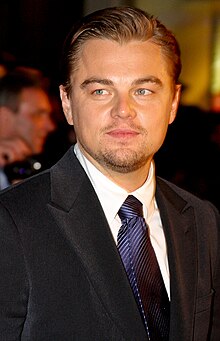
Leonardo Wilhelm DiCaprio

He was born  in November 11, 1974, He is an American actor and film producer. He has received multiple awards, including a Golden Globe Award for Best Actor for his performance in The Aviator (2004). In addition, he has won a Silver Bear, a Chlotrudis Award and a Satellite Award among others, and has been nominated by the Screen Actors Guild and the British Academy of Film and Television Arts
Born and raised in Los Angeles, California, DiCaprio started his career by appearing in television commercials prior to landing recurring roles in TV series such as the soap opera Santa Barbara and the sitcom Growing Pains in the early 1990s. He made his film debut in the comedic sci-fi horror film Critters 3 (1991) and received first notable critical praise for his performance in This Boy's Life (1993). DiCaprio achieved recognition for his subsequent work in supporting roles in What's Eating Gilbert Grape (1993), Marvin's Room (1995), and The Basketball Diaries (1996), before landing a leading role in Romeo + Juliet (1996), and came to international fame with his role in James Cameron's Titanic(1997), the highest-grossing film for more than 12 years until 2010.
Since the 2000s, DiCaprio's performances have continued to draw positive comments from film critics, and he has been nominated for various accolades for his work in such films as Catch Me If You Can (2002), Gangs of New York(2002),The Aviator (2004), Blood Diamond (2006), The Departed (2006), and Revolutionary Road (2008).His latest films Shutter Island (2010) and Inception (2010) rank among the biggest commercial successes of his career.DiCaprio owns a production company named Appian Way Productions, whose productions include the films Gardener of Eden (2007) and Orphan (2009).
A committed environmentalist, DiCaprio has received praise from environmental groups for his activism. His romantic relationships have been widely covered in the media. Following a high-profile relationship with Brazilian model Gisele Bündchen, he is currently in a relationship with Israeli model Bar Refaeli.

Hollywood Action hero


Arnold Alois Schwarzenegger 
Arnold Alois Schwarzenegger was born in July 30, 1947.He is an Austrian-American body builder, actor, model, businessman, and politician, who is currently serving as the 38th Governor of California.
Schwarzenegger began weight-training at 15. He was awarded the title of Mr. Universe at age 22 and went on to win the Mr. Olympia contest a total of seven times. Schwarzenegger has remained a prominent face in the sport of bodybuilding long after his retirement, and has written several books and numerous articles on the sport.
Schwarzenegger gained worldwide fame as a Hollywood action film icon, noted for his lead role in such films asConan the Barbarian and The Terminator. He was nicknamed the "Austrian Oak" and the "Styrian Oak" in his bodybuilding days, "Arnold Strong" and "Arnie" during his acting career, and more recently the "Governator" (aportmanteau of "Governor" and "Terminator").
As a Republican, he was first elected on October 7, 2003, in a special recall election to replace then-Governor Gray Davis. Schwarzenegger was sworn in on November 17, 2003, to serve the remainder of Davis's term. Schwarzenegger was then re-elected on November 7, 2006, in California's 2006 gubernatorial election, to serve a full term as governor, defeating Democrat Phil Angelides, who was California State Treasurer at the time. Schwarzenegger was sworn in for his second term on January 5, 2007.
Schwarzenegger is married to journalist Maria Shriver. The two have four children (two girls and two boys).

Disney's Hollywood Studio


Disney's Hollywood Studios 

MGM sorcererhat.jpgIt is a theme park at the Walt Disney World Resort. Spanning 135 acres (546,000 m²) in size, its theme is show business, drawing inspiration from the heyday of Hollywood in the 1930s and 1940s. The third park built at the resort, it opened on May 1, 1989 as Disney-MGM Studios.
In 2009, the park hosted approximately 9.7 million guests, ranking it the fourth-most visited amusement park in the United States, and seventh-most visited in the world.
The park is represented by The Sorcerer's Hat, a stylized version of the magical hat from Fantasia. It replaced theEarful Tower as the park's icon in 2001.
The World you have entered was created by The Walt Disney Company and is dedicated to Hollywood—not a place on a map, but a state of mind that exists wherever people dream and wonder and imagine, a place where illusion and reality are fused by technological magic. We welcome you to a Hollywood that never was—and always will be.
—Michael Eisner, May 1, 1989
 
The attraction of the park :
 The park consists of six themed areas. Unlike the other Walt Disney World parks, Disney's Hollywood Studios does not have a defined layout; it is more a mass of streets and buildings that blend into each other, much like a real motion picture studio would. The layout of the park, however, did have an interesting design characteristic. The plaza at the end of Hollywood Boulevard featured a large Hidden Mickey, which was visible in aerial photographs of the park and on the park's early guide maps. However, construction and other changes to the park have eliminated much of this image.